01 — what it is
A shooter built out of nothing but code
HELLGATE is a small, complete game: a first-person arena shooter with procedural levels, a real combat loop, and a wave structure that gets harder until you die. It is also a reference for how far you can get in Three.js without loading a single image, model, or audio file.
02 — in the arena
Look at it
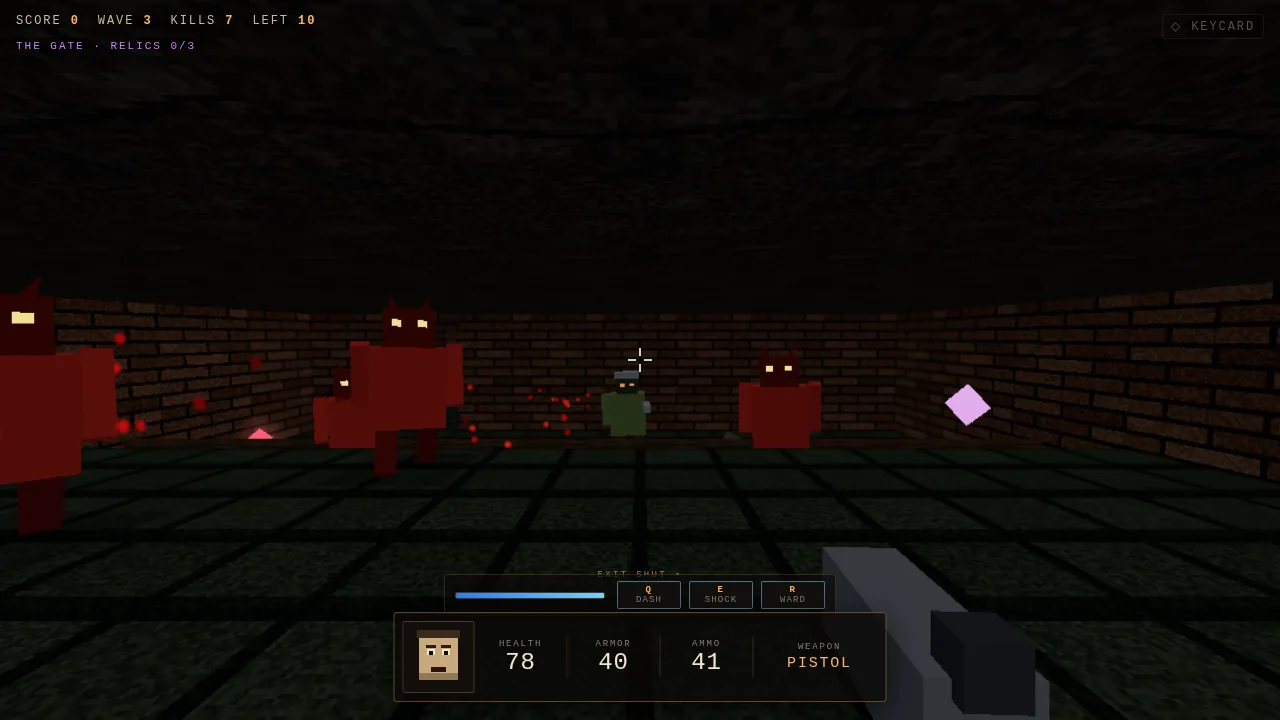
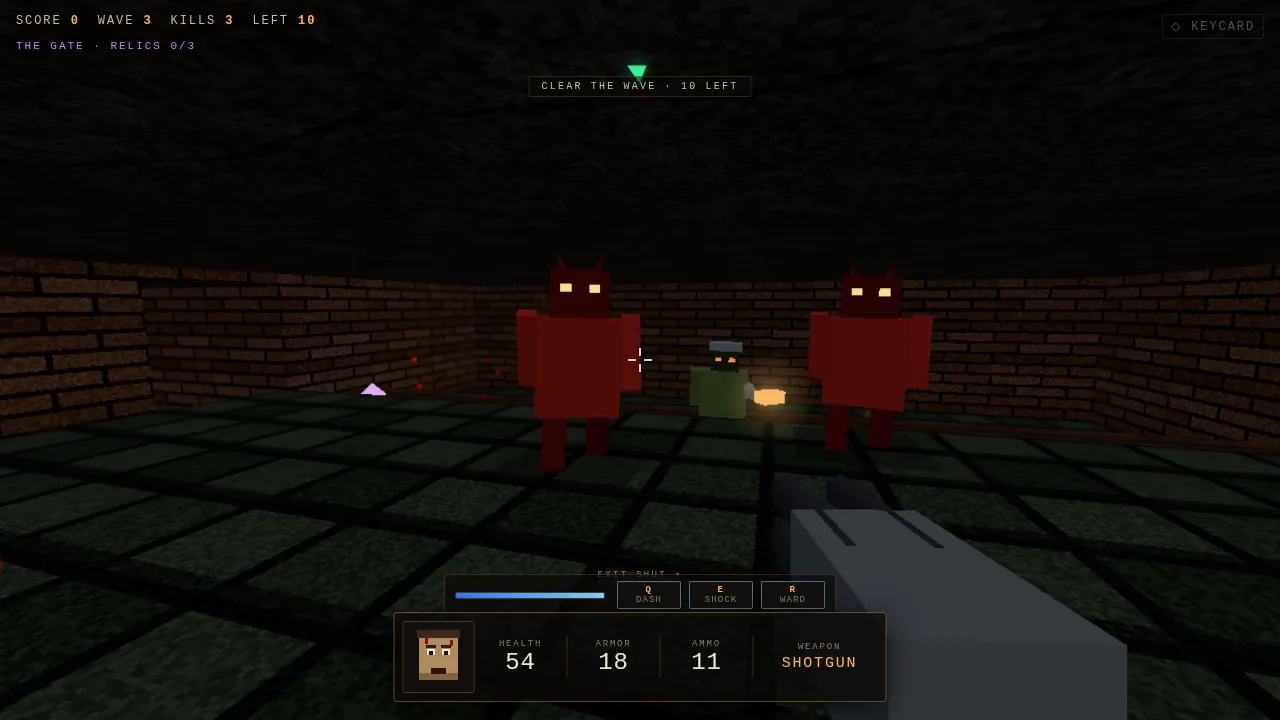
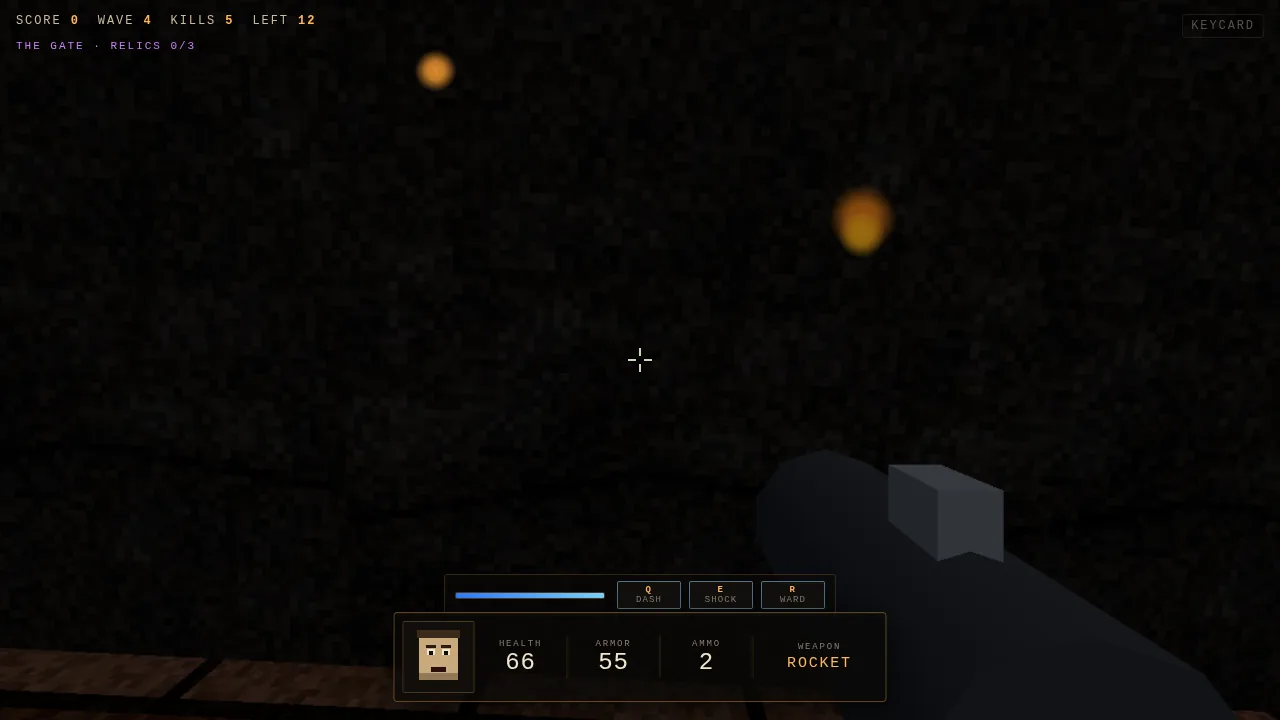
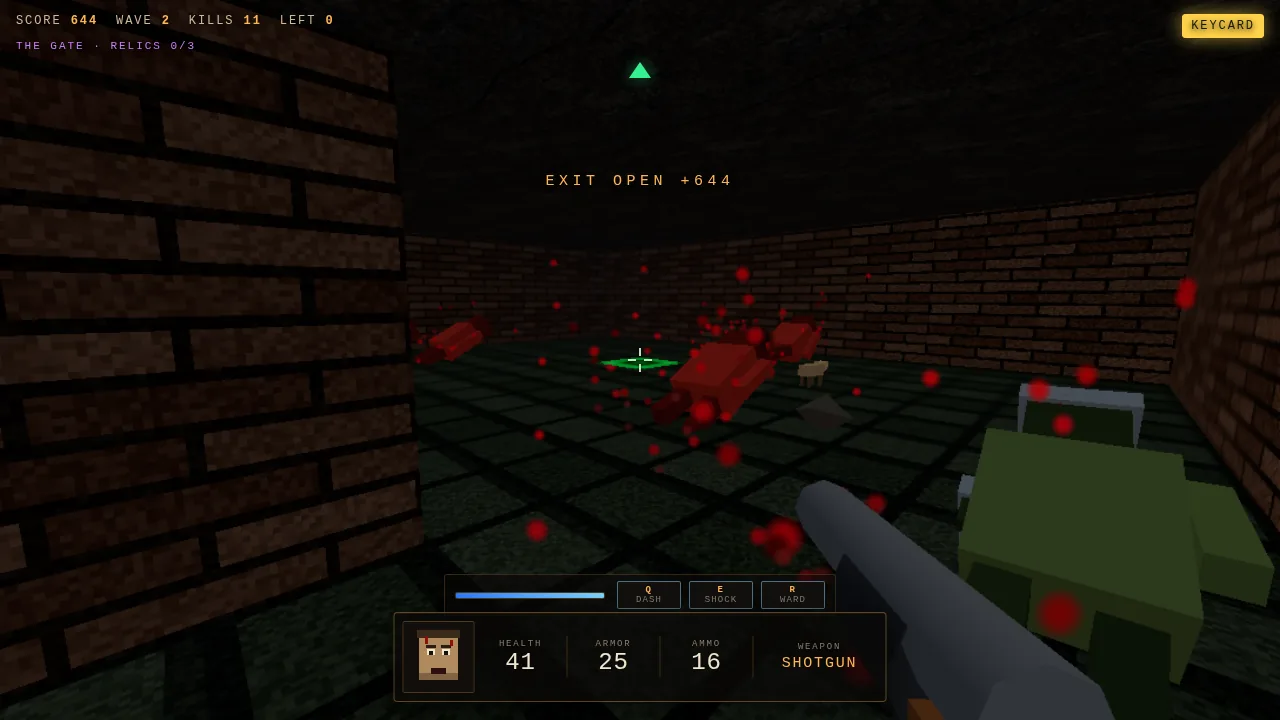
Real frames, captured from the game running headless in Chromium. No mockups.
03 — the map is a seed
One string, one arena
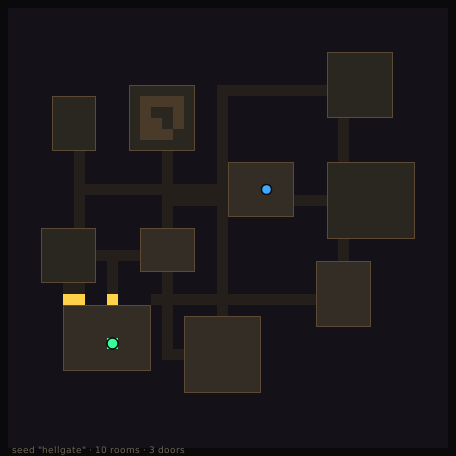
Rooms are carved as rectangles, joined by L-shaped corridors, then given random ceiling heights so corridor mouths read as doorways. The exit room gets sealed behind doors, one room gets a raised ledge, and the whole thing is merged into five meshes. Type the same seed twice and you get the same map, down to the brick.
04 — how it plays
Clear the wave, open the exit
Imps
Throw fireballs, telegraph the throw, wander until they see you. Wave two adds grunts that close distance and hitscan you at range.
The keycard
From wave three the exit is keycard-locked as well as wave-locked: find the yellow card, then clear the room, then leave.
Powers
Three classes, five powers on an energy pool: dash, shockwave, ward, volley, bulwark. A companion drone follows you and shoots what it can see.
Pickups
Health, armour, bullets, shells and rockets are scattered procedurally each wave. Armour eats half of every hit.
Feedback
Hit flash on enemies, tracers, wall decals, gibs, a face indicator that degrades, damage arrows, and screen shake on rockets.
controls
05 — under the hood
Small files, readable code
No bundler, no build step, no framework. ES modules and an import map. The level generator imports nothing, so it can be unit-tested in Node without a browser.
Generator + collision
Sector grid, rooms, corridors, doors, circle-vs-wall sliding, wall raycasts. Pure math, no Three.js.
Geometry
Turns the grid into five merged BufferGeometries with hand-built UVs and normals.
AI
Two enemy types on one FSM: idle, chase, attack, pain, death. Grid line-of-sight, shared geometry.
Feel
Pooled particles, tracers, decals and lights. Nothing allocates per shot.