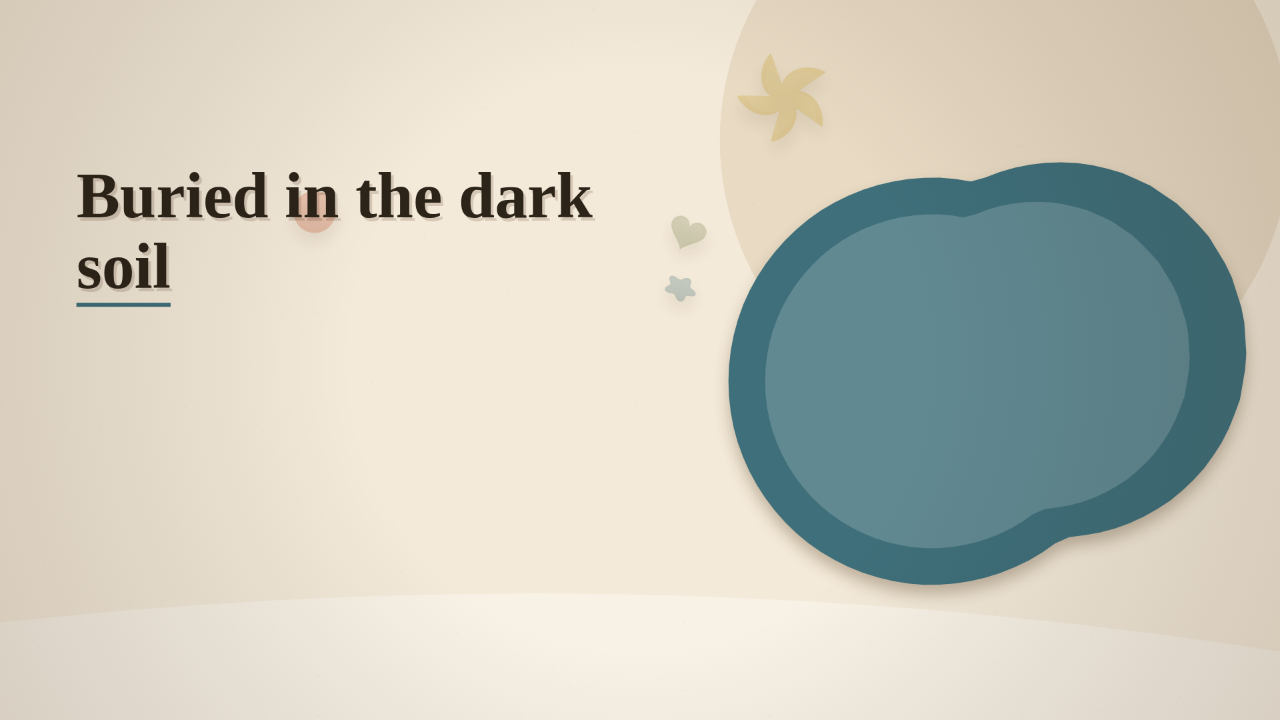
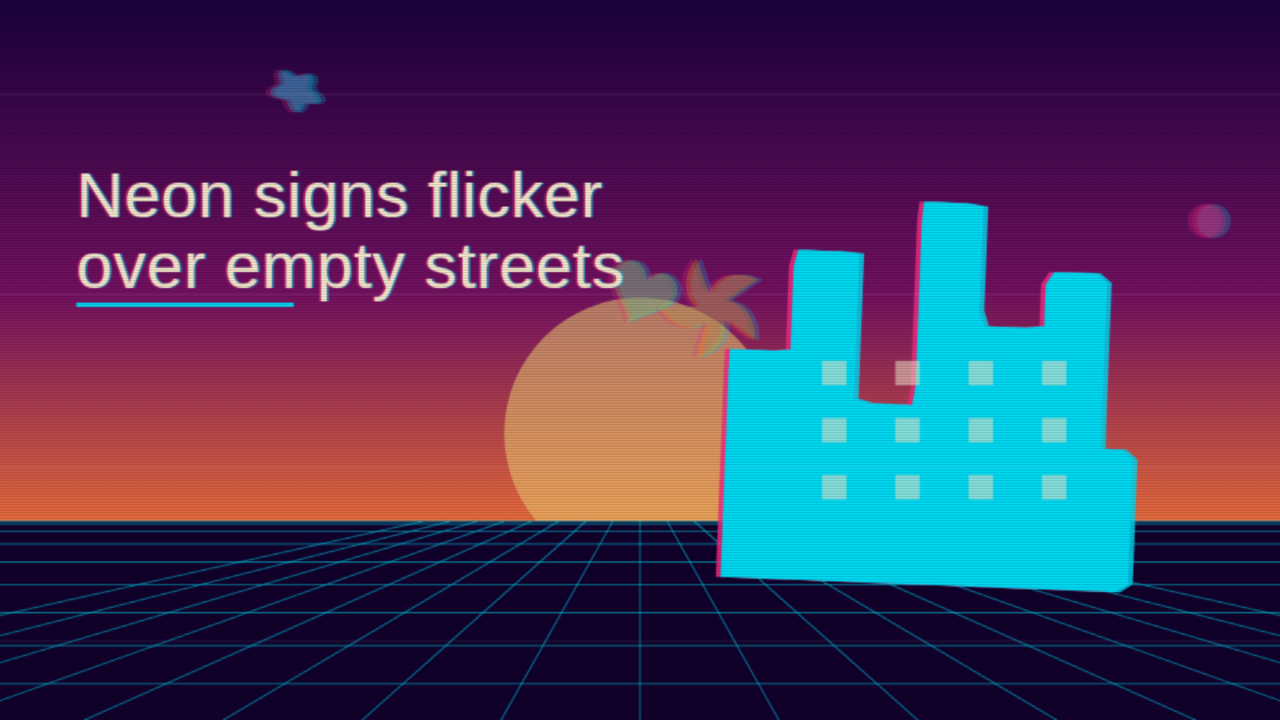
Paste a paragraph, pick a look, and Kinemotif turns every sentence into an animated scene — drawing its own artwork, morphing scene to scene, and synthesising a soundtrack as it plays. Everything ships as one HTML file.
No build step. No video export. No network calls. 95 KB, and it runs offline.
Most motion tools ask you to place keyframes. Kinemotif asks you to write a sentence and then lets you adjust what it did.
Six complete art styles — pixel arcade, stick figure, neon night, paper cut, cosmic dream, VHS retro. Each one changes the palette, the type, the background and how shapes are painted.
Paste anything. Sentences become scenes, each with a title pulled from its first clause and a picture matched to its keywords. Or start blank and write the slides yourself.
Scrub the timeline, retime a scene, change its entrance or camera. When it feels right, export a single HTML file that plays full-screen on its own.
Everything is generated at runtime from about 2,400 lines of JavaScript and Canvas 2D. There are no images, fonts or audio files in the repository.
Every motif is a closed polygon resampled to the same point count, so a wave flows into a cloud into a rocket. Not a crossfade — actual geometry interpolation.
Pad, bass, arpeggio, drums and reverb built from oscillators. Seven moods, each with its own tempo, scale and chord progression. Never the same twice.
Sentence splitting, title extraction and a keyword map of 14 motifs. The result is editable — every field is a normal form input, not a black box.
Rise, zoom, slide, drop, flip, blur, pop and more, each paired with an easing curve from linear to elastic and spring, plus a per-scene camera move.
Export a standalone HTML show, save a project as JSON, or reopen an exported show to keep editing it. Undo and redo run across everything.
No CDN, no fonts, no analytics, no server. Your story never leaves the browser — it lives in localStorage until you export it.

Switch the look at any point — the whole show re-renders in the new style without losing a word.
Short, and written for someone who just wants to make the thing.
The wizard, the editor, every inspector field, export and import.
Read the guide →All styles, motifs, transitions, entrances, easings, cameras and moods in tables.
Open the reference →The JSON schema, and how an exported show embeds itself into a copy of the player.
See the format →Kinemotif exports HTML shows. Kinemorph is the heavy sibling — PixiJS, TypeScript and frame-exact MP4 export.
See Kinemorph →Paste the changelog, the launch note, the lesson plan. It takes about a minute.
Open the studio →