
Why this page exists
Disappearance is the purest kind of mystery: there is no artifact to argue about, only an absence. That makes these cases unusually vulnerable to storytelling, and unusually good practice for reading evidence carefully. Each entry below separates what is documented, what is the leading explanation, and what nobody knows — and two neighbouring pages, Roanoke and Dyatlov Pass, show what it looks like when a disappearance stops being one.
1 · Flight MH370 Open
On 8 March 2014 a Malaysia Airlines Boeing 777 left Kuala Lumpur for Beijing with 239 people aboard and stopped talking to air traffic control about forty minutes later. Military radar tracked it turning back across the Malay Peninsula and out over the Indian Ocean. Automated satellite "handshakes" continued for hours, and analysis of their timing placed the final position on one of two long arcs; the northern arc was ruled out, leaving a stretch of the southern Indian Ocean west of Australia.
In July 2015 a flaperon from a 777 washed up on Réunion, and further pieces were confirmed as belonging to the aircraft. The underwater search covered 120,000 square kilometres and found nothing; the official search ended in 2017, a private effort in 2018. The aircraft's location is broadly known and its wreck has never been found.
Documented: the diversion, the satellite data, the confirmed debris. Leading explanation: an intentional diversion and a controlled flight into the southern ocean. Unknown: who was flying, why, and where the wreck lies.
2 · The Mary Celeste Open
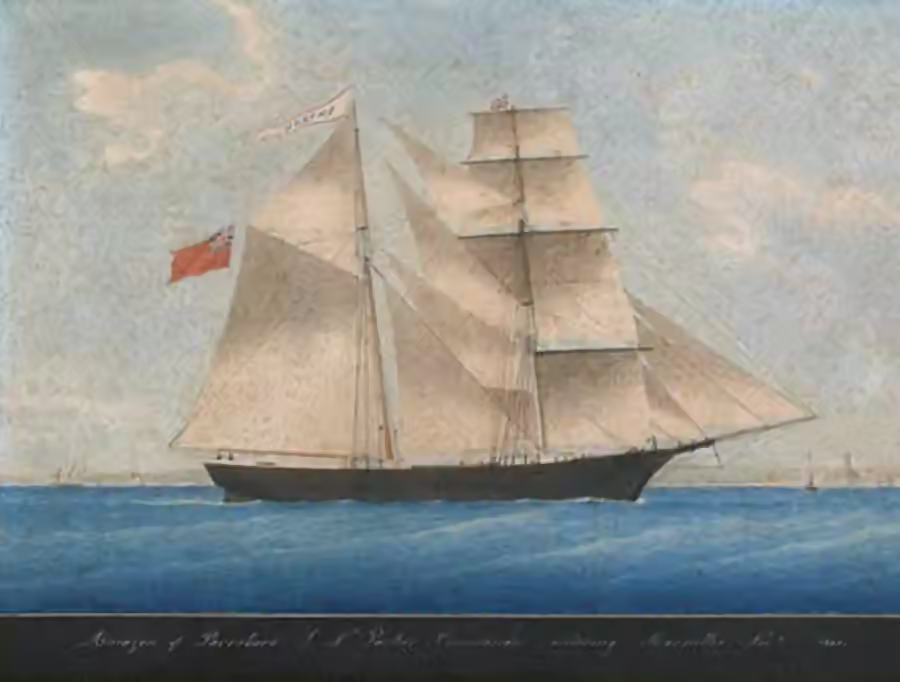
Found on 5 December 1872 between the Azores and Portugal, the brigantine was under sail with no one aboard, her cargo of industrial alcohol partly emptied, her single lifeboat missing, and the last log entry eleven days old. There was no sign of violence, no bodies, and the ship was still seaworthy enough to be sailed to Gibraltar.
The explanations on offer are all partial: an alcohol-vapour explosion that panicked the crew into the lifeboat, a waterspout, a rogue wave, piracy, insurance fraud. The vapour theory fits the evidence best — nine barrels were empty and the hold showed no fire damage — but it does not explain why the lifeboat was never found and why a competent crew did not simply return to a ship still afloat.
3 · Amelia Earhart Open
Earhart and navigator Fred Noonan disappeared on 2 July 1937 while trying to find Howland Island, a two-kilometre speck in the Pacific, at the end of a 4,000-kilometre leg. Radio transmissions were heard, increasingly strained, and then nothing. The US Navy searched 250,000 square miles and found no trace.
The best-supported hypothesis is that they landed on the reef at Nikumaroro, where the international group TIGHAR has recovered artefacts including a fragment of aircraft aluminium and a piece of a shoe, and where human bones were found in 1940 and judged male at the time — a judgement later disputed. It is suggestive, not proven. Claims that they were captured by the Japanese rest on hearsay and a photograph that has been shown to predate the flight.
4 · The Sodder children Open
On Christmas Eve 1945 a house in Fayetteville, West Virginia, burned to the ground. Nine children were inside; four got out, and five — aged five to fourteen — were never found. The fire was intense enough that the family assumed the worst, but no remains were ever recovered from the site, and the house burned quickly enough that an arson inquiry was opened.
The family spent decades investigating: a billboard alongside a highway, a suspicious phone call, a report of children glimpsed in a passing car. The official position is that the children died in the fire. The absence of remains is real and genuinely odd; it is also possible in a hot, collapsing, heavily excavated fire scene. This is the archive's clearest example of a case where a family's refusal to accept a probable answer is entirely understandable and still not evidence.
5 · The MV Joyita Open
In 1955 the Joyita left Samoa for the Tokelau Islands with 25 people and was found five weeks later, half-submerged and abandoned, hundreds of kilometres off course. Her radio was broken and set to a dead channel, her clocks had stopped, and a doctor's bag and the captain's briefcase were missing. Nobody was ever found.
Fiji's inquiry concluded that the vessel had taken on water through a corroded pipe, that the passengers had taken to a raft or been swept off, and that the captain had died trying to raise help. It is a competent explanation with holes in it — the missing briefcase, the state of the radio — and no better one has replaced it.
6 · Percy Fawcett Open
The British explorer walked into the Mato Grosso in 1925 with his son and a companion, looking for a lost city he called "Z", and never came out. Over the following decades, dozens of people died or vanished looking for him. His final letter said he would proceed without guides and expected to be delayed.
The most plausible account is that the party perished in the forest or was killed by an indigenous group defending its territory — a scenario supported by oral accounts collected much later. The romantic version, that Fawcett found his city and chose to stay, has no evidence at all. Archaeology since the 2000s has found large pre-Columbian settlements in the Amazon, which vindicates part of his intuition without rescuing his expedition.
7 · The Moptera and the small cases
Most disappearances are quiet. Fishing boats, solo hikers, people who walked out of hospitals. Official statistics on missing persons are large — the FBI's missing-persons file runs to tens of thousands of open cases at any time — and the overwhelming majority resolve, usually within days, without a mystery.
The famous cases above are famous because they are photogenic, not because they are representative. Reading them well means holding two things at once: something genuinely unexplained happened, and the most likely explanation is still something ordinary that left no trace.
Every case has the same shape. A real event; a document trail that stops; an explanation that fits most of the evidence; and a residue nobody can close. The honest label is "open", and an open case is not evidence for anything specific — not for aliens, not for conspiracy, and not for the supernatural.
Where a case does close, it closes on evidence: the Dyatlov Pass avalanche model, the Croatoan carving and hidden fort, the Romanov graves. That is the standard worth applying everywhere.
Sources for this page
- Australian Transport Safety Bureau, The Operational Search for MH370 (final report, 2017)atsb.gov.au
- Wikipedia, “Malaysia Airlines Flight 370” — timeline, satellite analysis, debrisen.wikipedia.org
- Britannica, “Mary Celeste” — the 1872 discovery and the inquiriesbritannica.com
- TIGHAR, the Nikumaroro hypothesis for the Earhart disappearancetighar.org
- Wikipedia, “Sodder children disappearance” — the fire, the inquiries, the family's searchen.wikipedia.org
- Wikipedia, “MV Joyita” — the 1955 inquiry findingsen.wikipedia.org
- Wikipedia, “Percy Fawcett” — the 1925 expedition and later accountsen.wikipedia.org