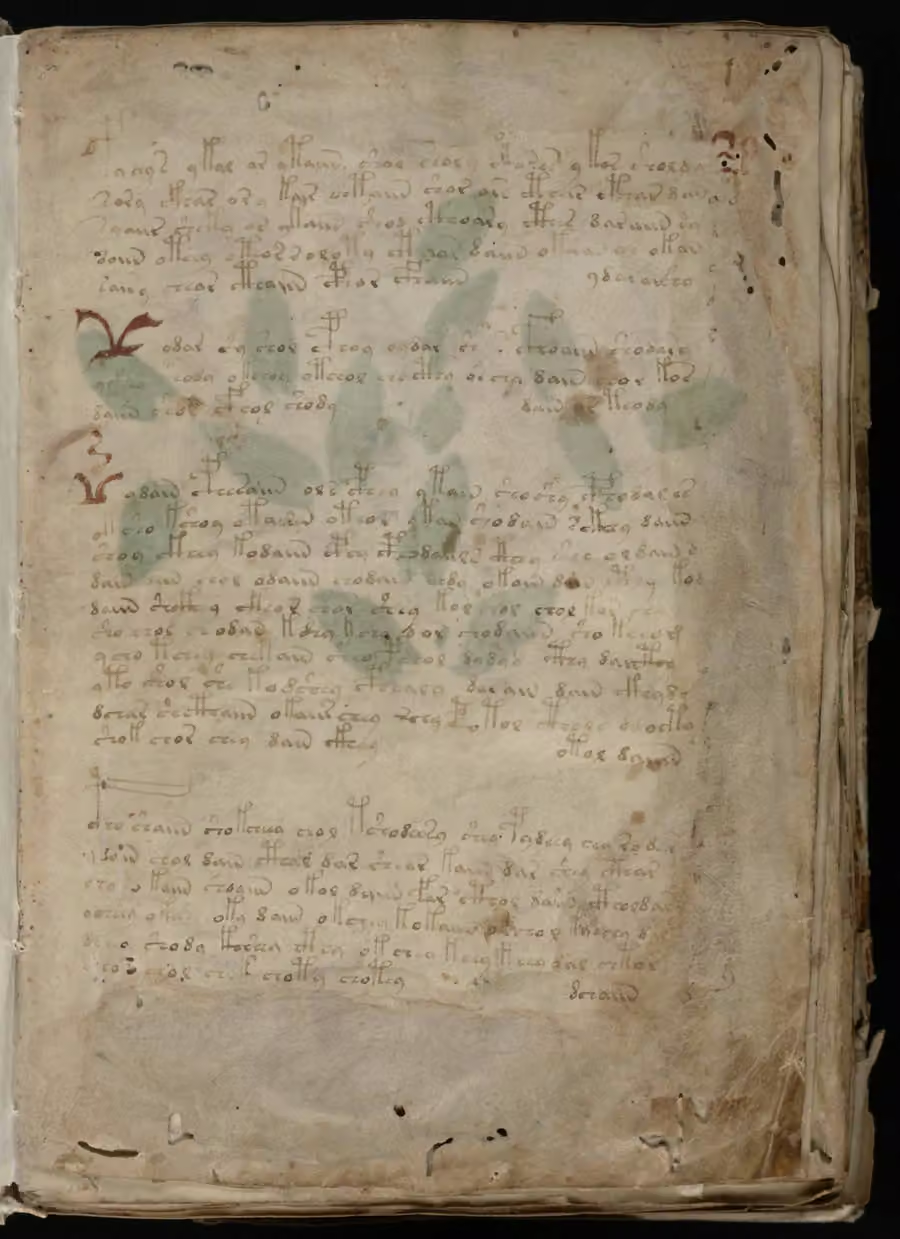
Sources are grouped by field. Within each group, primary material — the text or the paper — is listed before commentary. Where a page quotes a fringe claim, the fringe source itself is included, so the claim can be read in its own words rather than in a hostile summary.
1 · Primary and classical texts
- Hesiod, Theogony 700–739 — the Titans, the approach to Tartarus, with Greek and Englishgreekmythology.com/sources/hesiod/theogony/700-739
- Hesiod, Theogony — full text in a teaching editionopen.maricopa.edu
- Caldwell translation with commentary (PDF)classics.domains.skidmore.edu
- Theoi Project — Tartaros, with the classical citations assembledtheoi.com/Kosmos/Tartaros.html
- GreekMythology.com — “Tartarus in the ancient sources”, 19 passages from 11 authorsgreekmythology.com/sources/figures/tartarus
- Josephus, Antiquities 5.125 — on the bones of giants, quoted in contextthetorah.com
- John Cleves Symmes Jr., Circular No. 1 (1818) — full quotationhistory.com
- The Flat Earth Society FAQ — the movement’s own statement of its evidencetheflatearthsociety.org
- Answers in Genesis, “Giants in the Bible” — the literalist readinganswersingenesis.org
- Creation Ministries, “Dinosaurs and dragons: stamping on the legends”creation.com
- Creation Ministries, “A flat earth, and other nonsense”creation.com/en/articles/refuting-flat-earth
- Apologetics Press, “Historical Support for the Coexistence of Dinosaurs and Humans”apologeticspress.org
- The Atlantic (1873), “The Symmes Theory of the Earth”theatlantic.com
2 · Geology, geodesy and the expanding Earth
- USGS, This Dynamic Earth — “Developing the theory”pubs.usgs.gov/gip/dynamic/developing.html
- Sudiro (2014), Hist. Geo Space Sci. 5, 135 — expansionism as pseudoscientific beliefhgss.copernicus.org/articles/5/135/2014
- Scalera (2016), Hist. Geo Space Sci. 7, 125 — the defence of slow expansionhgss.copernicus.org/articles/7/125/2016
- Earth-Science Reviews — “The expanding earth: an essay review”sciencedirect.com
- Earth-prints — expansionist tectonics, full textearth-prints.org
- NASA/JPL (2011), “NASA Research Confirms it’s a Small World, After All”jpl.nasa.gov
- Pacific Northwest Seismic Network, “Earth is not expanding”pnsn.org/blog/earth-is-not-expanding
- NPS, “How the Tower Formed” — Devils Towernps.gov/deto
- NPS, “Columnar Jointing”nps.gov/subjects/volcanoes
- NPS Geodiversity Atlas — Devils Towernps.gov/articles
- IUGS Geoheritage, “Devils Tower, Mateo Tepe”iugs-geoheritage.org
- Scientific American, “Volcanic Activity, Not Giant Bears, Created Enigmatic Devils Tower”scientificamerican.com
- USGS, “Did people and dinosaurs live at the same time?”usgs.gov/faqs
3 · Astronomy
- Center for Astrophysics, “New Evidence That All Stars Are Born in Pairs”cfa.harvard.edu
- Berkeley News — Sadavoy & Stahler, Perseus cloud binary modelnews.berkeley.edu
- BBC Future, “Our Sun may once have had a twin” — Nemesis statusbbc.com/future
- Eos/AGU, “1.3 Million Pairs of Stars Surround the Sun”eos.org
- arXiv, “The importance of binary stars”arxiv.org/html/2411.18470v1
- Sun dog / parhelion — atmospheric opticsen.wikipedia.org/wiki/Sun_dog
4 · Oceanography and the deep sea
- NOAA NCEI, “Mapping Our Planet, One Ocean at a Time”ncei.noaa.gov
- World Atlas — the 28.7% high-resolution figure (April 2026)worldatlas.com
- Seabed 2030seabed2030.gebco.net
- NOAA Ocean Service, “What is the Bermuda Triangle?”oceanservice.noaa.gov
- NOAA Ocean Service, “Is Atlantis real?”oceanservice.noaa.gov/facts/atlantis.html
5 · Hollow Earth, polar exploration and the ice wall
- Library of Congress, Hollow Earth Theories: A List of Referencesguides.loc.gov/hollow-earth/introduction
- Physical Geography 25(5) — “Hollow and Habitable Within: Symmes’s Theory”tandfonline.com
- University of Canterbury — “Tales of a Hollow Earth” (thesis)ir.canterbury.ac.nz
- Discover, “Hollow Earth: A Journey Through 3 Centuries of Conspiracy Theory”discovermagazine.com
- UAF Geophysical Institute, “The Hollow Earth Theory”gi.alaska.edu
- NCSE, “Inside Out and Round About, Part 2” — Koreshan concave Earthncse.ngo
- Ohio State University, Byrd Polar archiveslibrary.osu.edu
- Long Now Foundation, “The Truth About Antarctica”longnow.org
- Swoop Antarctica — Bunger Hills, Byrd and the conspiracy literatureswoop-antarctica.com
- All That’s Interesting — what Byrd actually foundallthatsinteresting.com
6 · Folklore, archaeology and hoaxes
- University of Bristol, “Darwinism & Dragons” — d’Huy’s phylogeneticsdinoproject.blogs.bristol.ac.uk
- Palaeontologia Electronica (2013), “Dinosaurs in Greco-Roman art?”palaeo-electronica.org
- BioLogos, “Dragons and Dinosaurs: The Surprising Link Between Folklore and Fossils”biologos.org
- Ronald Hutton, “Dragons: A History” — Gresham College transcript (PDF)gresham.ac.uk
- HISTORY, “Why Dragons Appear in So Many Cultures”history.com
- Massachusetts Historical Society, “The Cardiff Giant Hoax”masshist.org
- Archaeology magazine, “When Giants Roamed the Earth”archive.archaeology.org
- NCSE, “It Ain’t Necessarily So: Giants and Biblical Literalism”ncse.ngo
- George Fox University, “The Embarrassing and Alluring Biblical Giant” (PDF)digitalcommons.georgefox.edu
- Journal of Religion and Popular Culture — “Shocking Discoveries of Giants You Will Not Believe!!!”online.ucpress.edu
- Burnett, “Going Through Hell: ΤΑΡΤΑΡΟΣ in Greco-Roman Culture” (PDF)clintburnett.com
7 · Cryptids and mystery animals
- McGill Office for Science and Society, “Bigfoot Has Always Been a Hoax”mcgill.ca/oss
- BBC Science Focus, “Is Bigfoot real?”sciencefocus.com
- BBC Science Focus, “How do we know that the Loch Ness Monster doesn’t exist?”sciencefocus.com
- Science Friday, “The Science Behind Cryptid Sightings”sciencefriday.com
- The Guardian — Loch Ness eDNA survey (2019)theguardian.com
- Discover — Nessie sightings and theoriesdiscovermagazine.com
- Science News Explores — the bear/Bigfoot correlation studysnexplores.org
- National Geographic, “The Science Behind Bigfoot and Other Monsters”nationalgeographic.com
- Britannica, “Loch Ness monster”britannica.com
8 · Declassified documents and proven conspiracies
- NSA, Gulf of Tonkin declassification releasesnsa.gov
- NSA, “Skunks, Bogies, Silent Hounds, and the Flying Fish” (PDF)nsa.gov (PDF)
- National Geographic, “5 times the U.S. government revealed secrets”nationalgeographic.com
- HowStuffWorks, “11 Conspiracy Theories That Turned Out to Be True”history.howstuffworks.com
- Business Insider, “9 huge government conspiracies that actually happened”businessinsider.com
- Skeptoid — a stricter evidentiary test for “proven”skeptoid.com/episodes/416
9 · Fact-checking and reference
- Reuters Fact Check — “Earth is not flat or surrounded by an ice wall”reuters.com
- Reuters Fact Check — Antarctic “ice wall” map is an art forum creationreuters.com
- Reuters Fact Check — “The Earth is not covered by a dome or ‘firmament’”reuters.com
- Reuters Fact Check — “Devil’s Tower is not a tree”reuters.com
- USA Today — Operation Highjump fact checkusatoday.com
- USA Today — flat-Earth evidence roundupusatoday.com
- Britannica, “Flat Earth”britannica.com/topic/flat-Earth
- Britannica, “Tartarus”britannica.com/topic/Tartarus
- Britannica, “Bermuda Triangle”britannica.com/place/Bermuda-Triangle
- Physics World, “Fighting flat-Earth theory”physicsworld.com
- The Conversation — Bedford Level and atmospheric refractiontheconversation.com
- Lamont-Doherty Earth Observatory — gravity on a flat Earthlamont.columbia.edu
- Adventist Biblical Research Institute — the rāqîa‘ questionadventistbiblicalresearch.org
- Geology In — Devils Tower petrified-tree claimgeologyin.com
- Geographical — Bermuda Trianglegeographical.co.uk
- Live Science — why the Nazca Lines were builtlivescience.com
- National Geographic — the Nasca linesnationalgeographic.com
10 · Tartaria and ancient astronauts
- The Spinoff, “Inside the wild architecture conspiracy theory gaining traction online”thespinoff.co.nz
- Discover, “Tartaria: The Mystery Behind the Lost Empire and the Mud Flood Conspiracy”discovermagazine.com
- Skeptoid, “Tartaria and the Mud Flood”skeptoid.com
- AAP FactCheck, “Ancient empire’s link to historic buildings is a delusion”aap.com.au
- CityLab, “Inside the ‘Tartarian Empire,’ the QAnon of Architecture”architexturez.net (reprint)
- Brewminate, “Star Forts and the Tartaria Myth”brewminate.com
- All That’s Interesting, “Tartarian Empire”allthatsinteresting.com
- Wikipedia, “Tartarian Empire” — Fomenko/Levashov lineageen.wikipedia.org
- University of Wales Trinity Saint David, “The World That Was” (thesis PDF)repository.uwtsd.ac.uk
- Penn Museum, Expedition, “Scholars Will Call it Nonsense” — the Palenque sarcophagus lidpenn.museum
- Michael Heiser, “The Myth of a 12th Planet” (PDF)drmsh.com
- Hall of Maat, “The Return of Ancient Astronauts”hallofmaat.com
- Oxford TORCH, “April Fakes: The British Museum Crystal Skull”torch.ox.ac.uk
- The Conversation, “Why some people still believe that aliens shaped ancient civilisations”theconversation.com
- Heidelberg Aegyptiaca, “Ancient Astronaut Discourse and Egypt” (PDF)prop.ub.uni-heidelberg.de
- Discovery UK, “Legend to Launchpad: The Ancient Astronaut Theory”discoveryuk.com
11 · Lost lands, curses, prophecy, memory
- GSA Today (2017), “Zealandia: Earth’s Hidden Continent”geosociety.org
- Wikipedia, “Lost lands” — Sclater, Lemuria, Doggerland, Sundalanden.wikipedia.org
- Big Think, “Lemuria, the weirdest continent that never existed”bigthink.com
- Ex Carta, “Drowned Worlds” — Blavatsky and the root racesoculi-mundi.com
- Frontline, “The Lemuria myth” — Kumari Kandamfrontline.thehindu.com
- Nelson (2002), “The mummy’s curse: historical cohort study”, BMJpmc.ncbi.nlm.nih.gov
- Psi Encyclopedia (SPR), “Amityville Hoax”psi-encyclopedia.spr.ac.uk
- Smithsonian, “History of the Hope Diamond”naturalhistory.si.edu
- BBC News, “Mayan prophecies: Life after the (non) end of the world”bbc.com
- Kelly (2025), “Failed Prophecies Are Fatal” (PDF)bahai-library.com
- Waller, “Dancing plagues and mass hysteria”, The Psychologistbps.org.uk
- Provine (2007), “The laughter of the 1962 Tanganyika ‘laughter epidemic’”degruyterbrill.com
- Britannica, “Mandela effect”britannica.com
12 · The internet, quantum physics, the soul
- Wikipedia, “Dead Internet theory”en.wikipedia.org
- The Atlantic (2021), “The Dead Internet Theory”theatlantic.com
- Live Science, “What is the dead internet theory?”livescience.com
- Thales, Bad Bot Reportthalesgroup.com
- Stanford Encyclopedia of Philosophy, “Everett’s Relative State Formulation”plato.stanford.edu
- Wikipedia, “Many-worlds interpretation”en.wikipedia.org
- Britannica, “Many-worlds interpretation”britannica.com
- NIH/PMC, magnetoencephalography review — field strengths and clinical usepmc.ncbi.nlm.nih.gov
- Stanford Encyclopedia of Philosophy, “The Neuroscience of Consciousness”plato.stanford.edu
- Britannica, “Bohemian Club”britannica.com
13 · Cosmic silence, simulation, and reading too much into films
- Wikipedia, “The Dark Forest” — Liu Cixin, 2008en.wikipedia.org
- Wikipedia, “Dark forest hypothesis” — the argument and its criticismsen.wikipedia.org
- Wikipedia, “Fermi paradox”en.wikipedia.org
- Bostrom, “Are You Living in a Computer Simulation?” (2003, PDF)simulation-argument.com
- Beane, Davoudi & Savage (2012), “Constraints on the Universe as a Numerical Simulation”arxiv.org
- Wikipedia, “Omphalos hypothesis” — Gosse, 1857en.wikipedia.org
- Russell, The Analysis of Mind (1921) — the five-minute worldgutenberg.org
- USGS, “The age of the Earth” — 4.54 billion yearsusgs.gov
- Jon Negroni, “The Pixar Theory” (2013)jonnegroni.com
- Wikipedia, “Semmelweis reflex” — the rejection of handwashing evidenceen.wikipedia.org
14 · Basilisks, eggs, stray brains, invented centuries
- Wikipedia, “Roko’s basilisk”en.wikipedia.org
- RationalWiki, “Roko’s basilisk” — the Pascal’s-mugging critiquerationalwiki.org
- Andy Weir, “The Egg” — original textgalactanet.com
- Wikipedia, “The Egg (short story)”en.wikipedia.org
- Wikipedia, “Boltzmann brain”en.wikipedia.org
- Boddy, Carroll & Pollack (2016), “Why Boltzmann Brains Are Bad”arxiv.org
- Wikipedia, “Phantom time conspiracy theory”en.wikipedia.org
- Wikipedia, “Dendrochronology” — the continuous tree-ring recorden.wikipedia.org
- NASA, eclipse catalogue — datable historical eclipseseclipse.gsfc.nasa.gov
- Wikipedia, “Polybius (urban legend)”en.wikipedia.org
- Wikipedia, “27 Club” — the list and the statisticsen.wikipedia.org
15 · Ocean noise, mushrooms, corridors, and the press
- NOAA PMEL, acoustics programme — the “Bloop” and icequake attributionpmel.noaa.gov
- Wikipedia, “Bloop” — recording, location, explanationen.wikipedia.org
- Wikipedia, “Stoned ape hypothesis”en.wikipedia.org
- Wikipedia, “The Backrooms”en.wikipedia.org
- Wikipedia, “Quantum suicide and immortality”en.wikipedia.org
- Wikipedia, “One-electron universe”en.wikipedia.org
- Bernstein, “The CIA and the Media”, Rolling Stone (1977)carlbernstein.com
- Wikipedia, “Operation Mockingbird” — Church Committee contexten.wikipedia.org
- Wikipedia, “Nayirah testimony” — the incubator story and its exposureen.wikipedia.org
- Wikipedia, “Rugrats” — series background, for the fan-theory contrasten.wikipedia.org
16 · Satellites, gods, the Beatles, and real plots
- Wikipedia, “Black Knight satellite conspiracy theory”en.wikipedia.org
- NASA, STS-88 mission image gallerynasa.gov
- Wikipedia, “Bicameral mentality”en.wikipedia.org
- Wikipedia, “Paul is dead”en.wikipedia.org
- Snopes, “Paul McCartney died in 1966?”snopes.com
- Ball, “The Zoo Hypothesis”, Icarus (1973)sciencedirect.com
- Wikipedia, “Business Plot” — Butler, MacGuire, McCormack–Dicksteinen.wikipedia.org
- Wikipedia, “Watergate scandal” — timeline and documentsen.wikipedia.org
- Wikipedia, “Max Headroom signal hijacking” — the real 1987 intrusionen.wikipedia.org
- Wikipedia, “Solipsism” — the philosophical positionen.wikipedia.org
17 · Deep time, time loops, and a living planet
- Frank & Schmidt (2018), “The Silurian Hypothesis”, International Journal of Astrobiologyarxiv.org
- Wikipedia, “Silurian hypothesis”en.wikipedia.org
- Wikipedia, “Grandfather paradox”en.wikipedia.org
- Hawking (1992), “Chronology protection conjecture”, Physical Review Daps.org
- Wikipedia, “White hole”en.wikipedia.org
- Lovelock (1972), “Gaia as seen through the atmosphere”sciencedirect.com
- Watson & Lovelock (1983), the Daisyworld paperwiley.com
- Wikipedia, “Gaia hypothesis”en.wikipedia.org
- Wikipedia, “Operation Paperclip”en.wikipedia.org
Source audit
Every dossier ends with its own source list. This table is generated from the pages themselves each time the archive is rebuilt, so it cannot quietly drift from the content. If a page is thin, the number here shows it.
162 dossiers · 706 source entries · 4.7 per page on average. The thinnest page carries 2; the richest, 11.
How to use this bibliography
If you want to check a specific sentence, find the dossier it came from and follow the matching link. If a claim in the archive is not backed by one of these sources, it does not belong here — tell me and it will be removed or fixed.
For the creationist and flat-Earth material, the fringe sources are listed on purpose. The right way to assess an argument is to read it as its author wrote it, then read the response, then decide.
13 · Added November 2026
Sources introduced by the twelve dossiers added in the November 2026 expansion: cold fusion, the placebo effect, learning styles, growth mindset, the aquatic ape, Snowball Earth, the dinosaur extinction, panpsychism, the free energy principle, polyvagal theory, fast radio bursts and magnetoreception.
- Wikipedia, “Cold fusion” — history, replication attempts and reviews (Cold Fusion)en.wikipedia.org
- Fleischmann & Pons (1989), J. Electroanal. Chem. — the original claim (Cold Fusion)doi.org
- Berlinguette et al. (2019), Nature — the Google-funded replication programme (Cold Fusion)doi.org
- Wikipedia, “Sonoluminescence” — the neighbouring real effect (Cold Fusion)en.wikipedia.org
- Wikipedia, “Placebo” — definitions, history and trial design (The Placebo Effect)en.wikipedia.org
- Hróbjartsson & Gøtzsche (2001), NEJM — is the placebo powerless? (The Placebo Effect)doi.org
- Kaptchuk et al. (2010), PLoS ONE — placebos without deception (The Placebo Effect)doi.org
- Wager et al. (2004), Science — placebo-induced opioid activity (The Placebo Effect)doi.org
- Wikipedia, “Learning styles” — models, history and criticism (Learning Styles)en.wikipedia.org
- Pashler et al. (2008), Psychological Science in the Public Interest — the review (Learning Styles)doi.org
- Dekker et al. (2012), Frontiers in Psychology — teacher beliefs about neuromyths (Learning Styles)doi.org
- Wikipedia, “Testing effect” — retrieval practice evidence (Learning Styles)en.wikipedia.org
- Wikipedia, “Mindset” — the fixed/growth distinction and its critics (Growth Mindset)en.wikipedia.org
- Sisk et al. (2018), Psychological Science — the meta-analysis (Growth Mindset)doi.org
- Yeager et al. (2019), Nature — the national experiment (Growth Mindset)doi.org
- Wikipedia, “Replication crisis” — why effect sizes shrink (Growth Mindset)en.wikipedia.org
- Wikipedia, “Aquatic ape hypothesis” — history and criticism (The Aquatic Ape)en.wikipedia.org
- Langdon (1997), Journal of Human Evolution — a testable version of the hypothesis (The Aquatic Ape)doi.org
- Marean et al. (2007), Nature — early shellfish use at Pinnacle Point (The Aquatic Ape)doi.org
- Wikipedia, “Orrorin” — bipedalism before the coastal sites (The Aquatic Ape)en.wikipedia.org
- Wikipedia, “Snowball Earth” — evidence, timing and debate (Snowball Earth)en.wikipedia.org
- Hoffman et al. (1998), Science — a Neoproterozoic snowball Earth (Snowball Earth)doi.org
- Wikipedia, “Cryogenian” — the period and its glaciations (Snowball Earth)en.wikipedia.org
- Wikipedia, “Cap carbonate” — the post-glacial dolostones (Snowball Earth)en.wikipedia.org
- Wikipedia, “Cretaceous–Paleogene extinction event” — evidence and debate (The Dinosaur Extinction)en.wikipedia.org
- Alvarez et al. (1980), Science — the iridium anomaly paper (The Dinosaur Extinction)doi.org
- Schulte et al. (2010), Science — the 20-year review of the impact hypothesis (The Dinosaur Extinction)doi.org
- Wikipedia, “Chicxulub crater” — discovery and structure (The Dinosaur Extinction)en.wikipedia.org
- Stanford Encyclopedia of Philosophy, “Panpsychism” — arguments and objections (Panpsychism)plato.stanford.edu
- Wikipedia, “Panpsychism” — history and variants (Panpsychism)en.wikipedia.org
- Stanford Encyclopedia of Philosophy, “The Hard Problem of Consciousness” (Panpsychism)plato.stanford.edu
- Wikipedia, “Integrated information theory” — the empirical cousin (Panpsychism)en.wikipedia.org
- Friston (2010), Nature Reviews Neuroscience — the founding paper (The Free Energy Principle)doi.org
- Wikipedia, “Free energy principle” — formalism and criticism (The Free Energy Principle)en.wikipedia.org
- Wikipedia, “Predictive coding” — the psychological cousin (The Free Energy Principle)en.wikipedia.org
- Stanford Encyclopedia of Philosophy, “Bayesian models of the mind” (The Free Energy Principle)plato.stanford.edu
- Wikipedia, “Polyvagal theory” — claims, use and criticism (Polyvagal Theory)en.wikipedia.org
- Grossman & Taylor (2007), Biological Psychology — a critical evaluation (Polyvagal Theory)doi.org
- Wikipedia, “Vagus nerve” — anatomy of the tenth cranial nerve (Polyvagal Theory)en.wikipedia.org
- Wikipedia, “Heart rate variability” — what RSA does and does not measure (Polyvagal Theory)en.wikipedia.org
- Wikipedia, “Fast radio burst” — discovery, localisation and models (Fast Radio Bursts)en.wikipedia.org
- Lorimer et al. (2007), Science — the first reported burst (Fast Radio Bursts)doi.org
- Chatterjee et al. (2017), Nature — localisation of a repeater to a dwarf galaxy (Fast Radio Bursts)doi.org
- CHIME/FRB Collaboration — the catalogue (Fast Radio Bursts)chime-frb.ca
- Wikipedia, “Magnetoreception” — behaviour, mechanisms and disputes (Magnetoreception)en.wikipedia.org
- Xu et al. (2021), Nature — cryptochrome 4 is magnetically sensitive (Magnetoreception)doi.org
- Wikipedia, “Cryptochrome” — the protein family and its roles (Magnetoreception)en.wikipedia.org
- Wikipedia, “Animal navigation” — how magnetic cues sit among others (Magnetoreception)en.wikipedia.org